Leonid Goldin | Towards Eternity and Perfection
Dance never lies.
Martha Graham
The American Ballet Theatre’s tour is one of the central events in New York’s cultural life. The ABT was founded in 1939. It is one of the world’s finest classical ballet companies, recognized by Congress as the “National Ballet of America.”
Timeless
The repertoire is dominated by classics—inevitably *Swan Lake*, *The Nutcracker*, *Giselle*, “Raymonda,” and “The Firebird,” yet contemporary dance is also well-represented. The theater’s history is intertwined with great choreographers such as Antony Tudor, Mikhail Fokin, Bronislava Nijinsky, Jerome Robbins, Mikhail Baryshnikov, and Jane Herman. Oliver Smith, Kevin McKenzie, and Alexei Ratmansky.
Classical ballet has never been and cannot be a mass art form. In fierce competition with pop culture, especially its lowest genres, classical ballet is being pushed aside. Ballet attendance in the U.S. has fallen by half over the past 50 years. At the same time, “Swan Lake,” “The Nutcracker,” and “Giselle” account for about 70% of the ballet market. The demographics of ballet are telling: over 80% of attendees are white, two-thirds are women, and the average age is over 50.
More than 15,000 ballet performances are staged worldwide each year. That is a small number, considering that in New York City alone, there are about 100,000 cultural events annually. Ballet is an elitist art form, no matter how much people try to modernize it and adapt it to political and ideological needs. Ballet’s influence on the social atmosphere is negligible, but it holds phenomenological significance as the standard of beauty in the human dimension.
Many ballet theater productions are grand-scale projects that require, in addition to the talent of the choreographer and performers, significant financial investment. Box office receipts and government funding cover only half the budget. The rest comes from sponsors. That is why theaters and concert halls bear their names, rather than those of great artists.
Becoming a professional ballet dancer requires years of study, rigorous training and rehearsals, and an enormous expenditure of physical and psychological resources. Yet famous athletes earn tens of millions a year, while a ballet soloist earns up to 100,000. One might doubt that democracy and the market guarantee meritocracy, social justice, and rewards commensurate with talent and effort. And yet, despite the highest standards and rigorous selection, competition to enter a leading ballet school is far more intense than admission to a business school at an elite university.
This season, the ABT presented ballets of virtuoso mastery and high intensity: “Othello,” “The Firebird,” “Raymonda,” “Mozartiana,” “Neo,” and “Clouds.” Artistic Director Susan Jaffe, a former prima ballerina for 22 years, introduced the new season: “From psychological tension and uncertainty to clarity, harmony, and celebration… The season spans the 300th anniversary of masterpieces, and each performance is a unique engagement with the present. These works affirm ballet’s ability to simultaneously reflect the past and foresee what lies ahead.”
I believe the audience is motivated not by a desire to understand the past or glimpse the future, but by aesthetic and emotional experiences; most seek in high art not the expansion of the boundaries of knowledge, but catharsis and spiritual rebirth. And the ABT lives up to these expectations with every performance.
This season featured a wide range of Russian art: Tchaikovsky, Glazunov, Stravinsky; “Mozartiana” staged by George Balanchine, “The Firebird” and “Neo” by Alexei Ratmansky.
Critics, as always, highly praise the skill of the ABT dancers, but have reservations about the choreography and the new repertoire. The consensus is that the classical repertoire is more vivid and interesting than the new works. The success of Calvin Royal, Kristin Shevchenko, Fangqi Li, and James Whiteside is particularly noted.
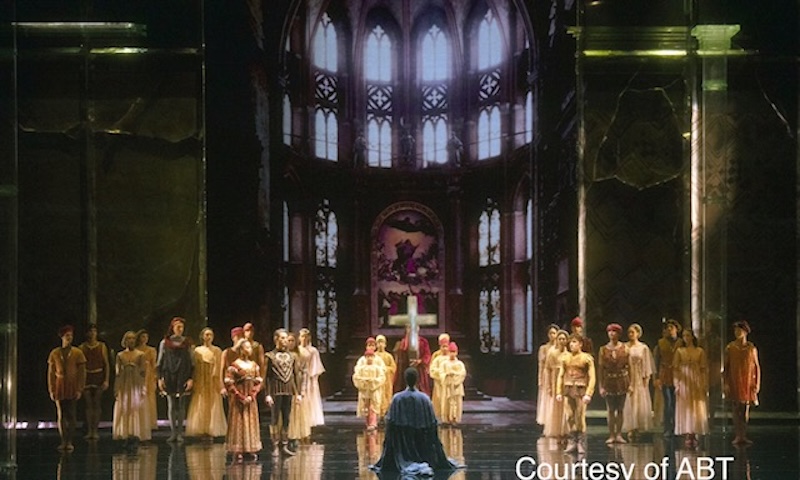
“Othello,” a ballet in three acts, has occupied a central place in the ABT repertoire since its premiere in 1997. The focus is on revealing the characters’ psychological states. Pushkin said: “Othello is not jealous; he is trusting.” The theater follows this interpretation. The fate of the great poet has parallels with Shakespeare’s Moor. Pushkin had African roots; he was called an “Arap” and a “monkey.” As a person and as an artist, he was an outsider to the Russian elite and fell victim to the sophisticated manipulations of his haters. But as he lay dying after a duel to defend his wife’s honor, he said: “Poor Natalie,” “She is not to blame for anything.”
In a review of “Othello” in The New York Times, the critic paid special attention to the fateful handkerchief, the instrument of Iago’s sinister plot. The monotony of the performance, focused more on drama than on dance, was noted; the verdict: “This ballet is cartoon land.” It seems to me that such a harsh judgment is unfair, and it reminds me of Soviet criticism of formalism and abstraction.
I go to the ballet theater not to fathom the sources of inspiration for choreographers and dancers, the intentions of the story’s author, or to evaluate its execution. Virtuoso dance technique and aesthetic perfection are all that interest me, and I have never left a performance by the American Ballet Theatre disappointed. I will not dwell on philosophical depth, neither during nor after the performance. That is the critics’ domain; their opinions may be intriguing, but they are not decisive. Everything that can be said in words is the prerogative of words. Music and dance have different purposes; they are the pinnacle of the pursuit of beauty and perfection. And the fewer ideas, ideologies, and lessons there are in ballet, the closer it is to this goal.
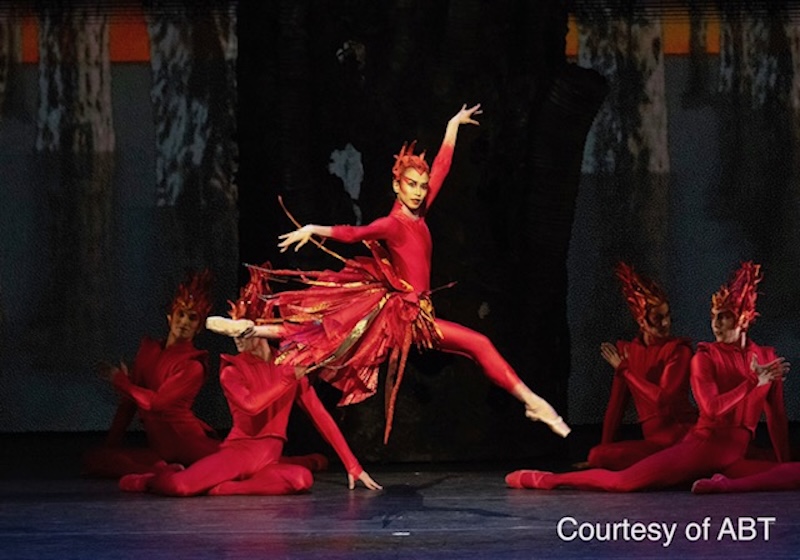
The final performance featured “Mozartiana,” “Neo,” and “The Firebird.” There was no deep philosophy or psychology here, no educational goals—it was the realm of dance for dance’s sake. There were no 32 fouettés, no Olympic jumps and lifts.
“Mozartiana,” set to Tchaikovsky’s music, is a tribute to Mozart in Balanchine’s choreography. This production, art for art’s sake, in my opinion, represents not so much musical genius as the innovative style of the great neoclassical choreographer.
“Neo” was created by Alexei Ratmansky during the COVID-19 pandemic for an online performance, when the artists were unable to perform in front of an audience. The technique is virtuosic, the dynamics are stunning, and the production is unexpected for Ratmansky, whose reputation is tied to the revival of the classical canon. In my opinion, this ballet is closer to the modern dance of the Martha Graham school. The aggressive, atonal Japanese music performed on traditional instruments is impressive, but I consider its main virtue to be that it didn’t last long.
Everything was wonderful in *The Firebird*! Here Stravinsky is at his finest, here are Diaghilev’s *Russian Seasons* in Paris, the legacy of the great Mikhail Fokin, Simon Pastuk’s magnificent set design, and Ratmansky in his element! This simple folk tale about Ivan Tsarevich and the magical bird carries a complex meaning: good and evil, blessing and curse are closely intertwined; white and black swans swap plumage; all of this is life and fate in its charms and trials—and at least on stage, goodness and great art triumph!
Two Worlds, Two Shakespeares
In the classical repertoire, the plot is often the backbone of the performance. Many ballets are based on great literary works: Shakespeare’s “Romeo and Juliet,” “Hamlet”, “Othello,” Cervantes’ “Don Quixote,” Goethe’s “Faust,” Hugo’s “Esmeralda,” Mérimée’s “Carmen,” Hoffmann’s “The Nutcracker,” Byron’s “The Corsair,” Pushkin “The Bronze Horseman,” “Onegin”, “The Fountain of Bakhchisaray,” Lermontov’s “Masquerade,” Gogol’s “The Nose,” and Tolstoy’s “War and Peace” and “Anna Karenina.”
The ABT frequently draws on great literary works; last year, the ballet “Crime and Punishment” attracted significant attention. “Othello” is presented in a choreography by Lar Lubovitch to music by Elliot Goldenthal. The three-act ballet conveys a tragic story of love, intrigue, betrayal, and jealousy, following established interpretations of Shakespeare’s original work.
The great bard borrowed the plot from the Italian novella “The Unfaithful Wife” by Giovanni Giraldi, a mid-16th-century author. The novella was intended as a warning about the dangers of interethnic marriages. While retaining the plot, Shakespeare radically departed from the approach of the original author; his Othello is heroic, romantic, an outsider, a marginal figure, a victim of treachery and prejudice.
Othello is a Moor, a person of Arab and Berber descent from North Africa. The tragedy evokes associations with current conflicts arising from the mass migration of people from other cultures to the West.
“Othello” has enjoyed a rich and vibrant history in theater, film, opera, and ballet, as well as in countless interpretations and critical analyses. As a rule, approaches and assessments follow Shakespearean conventions, and audiences are filled with sorrow and sympathy for the victims; empathy is divided equally, as in “Romeo and Juliet.” The blame lies with the environment, traditions, and prejudices.
But if one reads the story without liberal biases, it is clear that this is a crime that should inspire horror and outrage. Justifying “Othello” is impossible in any civilized society, based on common sense and moral standards. Especially in the current climate of intolerance toward domestic violence, toxic masculinity, and the fight for women’s rights and dignity. “Othello” is not only consumed by primitive jealousy and cruelty; he is also foolish, easily falling into Iago’s trap.
Having committed a mortal sin—the murder of an innocent—he also blasphemes: “Have you prayed to-night, Desdemona?” The phrase has entered dark folklore, but even believers do not wish to hear blasphemy in it. Shakespeare managed to make the criminal a hero who evokes compassion, and even militant feminism has not attempted to refute this portrayal. There have been few noticeable attempts to reinterpret the character, but the established stereotype of perception and judgment has persisted.
A comparison with another famous work by the great humanist Bard, *The Merchant of Venice*, inevitably comes to mind. Harold Bloom, the most renowned Shakespeare scholar, ranks *Othello* and *The Merchant of Venice* as the two greatest plays. The critic acknowledges that Othello’s downfall is the result of his inner weakness, and that Shylock is a caricature perpetuating anti-Semitic stereotypes. Yet Bloom focuses on academic complexities and nuances, leaving the negative resonance of these plays outside his scope.
Like *Othello*, *The Merchant of Venice* has been staged in thousands of theatrical productions, adapted for film, and even set to music as an opera. Here, too, the plot is borrowed from an Italian novella, but in this case, Shakespeare follows his predecessor’s outline and does not alter the characters’ traits. The same era—the Renaissance, Venice in its heyday, great art and literature, an enlightened aristocracy.
Jews live in the ghetto, wear identifying marks, are barred from many activities—even walking on the sidewalk is forbidden—and are defenseless before the law. And under these conditions, Shylock lends the aristocrat Antonio 3,000 ducats secured by a pound of flesh from his Christian body?! Poor Antonio is doomed, but he is saved by his beloved, who disguises herself as a male lawyer: the contract specifies a pound of flesh, but without blood, and here Shylock is forced to back down; he is enraged and loses his fortune and status. Humanism and justice triumph; everyone is merry and happy!
This absurdity, this pathological fantasy, this bloody slander has delighted the hearts of anti-Semites for centuries; the play was at the center of Nazi propaganda, and Shylock remains a byword in conspiracy theories about bloodthirsty Jews controlling the world. There have been attempts to humanize Shylock, but they are incompatible with the content. A product of lies and a sick fantasy cannot be justified by “artistic merits” if those merits serve a thousand-year-old hatred.
The play’s pathological effect is amplified by the fact that Jews were expelled from England in 1290 by King Edward I and were only allowed to return under Oliver Cromwell after 1656. In Shakespeare’s time, there were no Jews in England, except for a few who had converted to Christianity, but even they were viewed with suspicion.
In the modern history of literature and art, cases of boycotts and the removal of works that offend certain social groups are not uncommon. In America, the concept of “cancel culture” has emerged, and many national icons have been toppled. Today it is hard to imagine that after the defeat of fascism, *The Merchant of Venice* was boycotted in some American theaters and universities, and in
France, in Lyon, it was canceled at the request of the Jewish community.
There is an opportunity to radically rethink our understanding of *Othello* and *The Merchant of Venice* without depriving the Bard of his status as a great humanist. One can show that Othello, a villain by thoughtlessness, stupidity, animal instinct, and moral underdevelopment, is no less dangerous than Iago, a villain by design. This is closer to the truth in all ages and a creative insight.
“The Merchant of Venice” can be presented as a pathology of consciousness and conscience, a caricature, a bloody farce, which is reproduced from century to century, today in the slander about the “Israeli genocide” and Jewish money ruling the world.
Beyond Politics
Art has been linked to public life and politics since ancient times. In Ancient Greece, art served to promote civic and moral virtue; in Ancient Rome, it became propaganda, affirming imperial ideology and glorifying emperors. In the Middle Ages, art was subordinated to religious service. From the Renaissance onward, it expanded the boundaries of freedom, but primarily served the interests and tastes of those in power and the wealthy. The idea of “free art” emerged in the 19th century in France and England, and largely amounted to liberation from social and moral obligations and submission to commercialization. Under totalitarian regimes, art could exist only as an extension of politics. In a liberal democracy, artists actively participate in politics, defining their positions according to the social climate and considerations of populism and public relations. Contrary to the rhetoric of peacemaking and rapprochement, they contribute to the intensification of social contradictions and ideological confrontation.
But there are popular art genres that serve beneficial universal human values. Neapolitan song, French chanson, American jazz, Argentine tango, Brazilian samba and bossa nova, Chinese Shen Yun, and Spanish flamenco have gained worldwide recognition regardless of ideologies and prejudices.
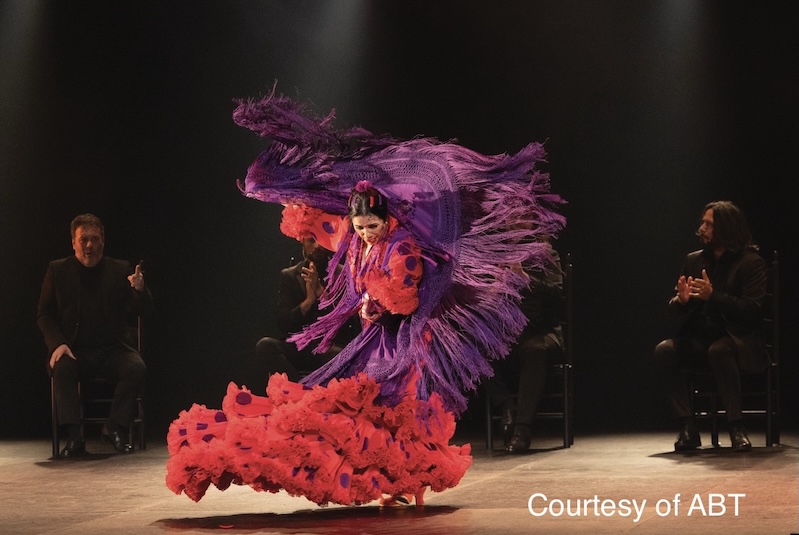
Every year, New York hosts a flamenco festival featuring leading masters from around the world. This year, the festival marks its twenty-fifth anniversary. Sixteen dance troupes participated. Performances also took place in Miami, Boston, Chicago, and Tampa in concert halls, theaters, museums, libraries, open-air venues, and bars, attracting 25,000 spectators. The festival organizers invited 2,000 children to the concerts.
The main Flamenco Gala concerts took place at the New York City Center and featured three programs. The theme was “New York and Flamenco: A True Love Story.” The stars of the season were Iva Yerababuena, Manuel Linán, Sara Baras, Ángeles Toledano, and Geraldo Núñez. The emotional expressiveness, technical mastery, and intensity of the performances are stunning.
Flamenco is a Spanish dance style that originated in Andalusia. It is very popular in Latin America. A trip to Madrid, Barcelona, Buenos Aires, Mexico City, Havana, or Santiago usually includes a flamenco concert. You don’t necessarily need to buy a ticket; performances are often seen in city squares.
Flamenco is characterized by the highest level of professional technique, accompanied by complex guitar parts, and conveys a wide range of intense emotional states. It is a product of nineteenth-century multiculturalism and incorporates Spanish, Gypsy, Arab, and Jewish traditions and melodies. The golden age of flamenco was the early 20th century.
In flamenco, there is no exploitation of the sexual image, as is rampant on the modern stage. In today’s world of dance, men often perform in female roles and women in male roles, but, in my view, gender equality contradicts the essence of flamenco. I found it strange to see a man on stage wearing a dress with a train. In the realm of flamenco, according to God’s design, a man remains a man, and a woman remains a woman. There is no blatant nudity, no provocative poses or movements, no shocking outfits, no wild hairstyles or tattoos, and none of the rest of that sort of thing.
At the same time as the flamenco festival in New York, a ballroom dance festival was taking place at the Hilton Hotel, where not only women but also schoolgirls displayed unabashed nudity that left nothing to the imagination. Since the time of Louis XIV, the female appearance in ballroom dancing has changed radically, but men still dance in tuxedos.
Dance is a hymn to life, a ritual part of any culture, an organic part of the movement and development of the human body and psyche. Dance develops the imagination, expands the boundaries of freedom and emotional space, allows one to experience and express emotions, and improves one’s outlook on life. Beauty is a gift from God; it makes the world and life more attractive, brings joy, and soothes the psyche traumatized by the environment and the passage of time.

Комментариев нет:
Отправить комментарий