“Peace in Our Time” as a Strategic Mechanism—and Its Risks
By Yakov Faitelson
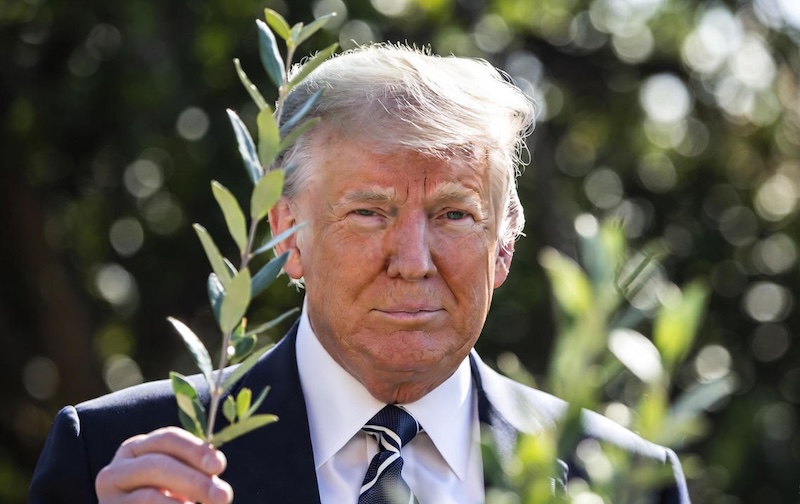
Иллюстрация: kontinentusa.com / AI
The ambition of U.S. President Donald Trump to present himself as a global peacemaker is not unusual in American political life. What is unusual is how this ambition has been translated into policy: not through the construction of durable strategic balances, but through transactional arrangements, selective concessions, and an implicit assumption that strategic adversaries will accept what is offered to them. In this respect, the resemblance to the appeasement strategy pursued by British Prime Minister Neville Chamberlain on the eve of World War II is not merely rhetorical. It reflects a recurring political mechanism.
Then, as now, policymakers sought to avert large-scale conflict at almost any cost. Then, as now, they assumed that territorial or political concessions would yield stability. The historical outcome is well documented: appeasement did not restrain aggression; it facilitated it. History does not repeat itself mechanically, but it often reproduces its underlying patterns. Policies built on transactional peace do not resolve conflicts; they displace and multiply them. The result is a cascade of regional shocks—from Ukraine to the Middle East—that ultimately undermines even the interests of the United States’ closest allies.
Ukraine as a Strategic Test Case
Ukraine has emerged as a central test of the notion that conflict can be managed through deal-making rather than resolved through deterrence. For Eastern European states, Russian imperialism is not an abstract concept but a lived historical experience. Consequently, any perceived weakening of U.S. commitment is interpreted not as pragmatic flexibility but as a strategic signal.
The message received in Moscow did not derive from a single American statement or decision. Rather, it emerged from an accumulation of diplomatic, political, and budgetary signals that suggested a preference for managing conflict over imposing clear costs on aggression. The European response has been unambiguous. Rather than moving toward de-escalation, European governments have accelerated rearmament, revitalized defense industries, and begun long-term strategic planning.
The result has been escalation rather than containment. Ukraine, supported by Europe, continues to enhance its military and technological capabilities. Russia, by contrast, faces mounting internal pressures: economic strain, social fatigue, and weakening central control over peripheral regions. This trajectory does not replicate the dynamics of 1917 or 1991 in any mechanical sense, but it combines familiar elements of systemic stress with potentially far-reaching implications for the international order.
Strategic Vacuums and Regional Ambitions
A potential weakening of Russia does not automatically translate into greater stability. On the contrary, it creates a strategic vacuum—and vacuums in international politics rarely remain unfilled. In this context, Turkey under President Recep Tayyip Erdoğan has positioned itself as a principal rather than peripheral actor.
Turkey’s actions are not confined to a single theater. Its involvement in Libya, Ukraine, the Caucasus, and across parts of Africa reflects a coherent regional strategy grounded in historical continuity, identity politics, and military projection—often described within Turkey itself in neo-Ottoman terms. Ankara’s military support for Ukraine, including the provision of combat-proven systems, proceeds in parallel with direct clashes of interest with Moscow elsewhere. Russian policymakers are also attentive to ideological discourse surrounding a “Greater Turan,” which encompasses extensive territories populated by Turkic peoples within Russia’s borders.
Israel’s Strategic Dilemma
From Israel’s perspective, these developments present a complex mix of opportunity and risk. On the one hand, a rapidly rearming Europe requires advanced, combat-tested military technologies. This demand creates significant economic and diplomatic opportunities for Israel. A robust defense industry is not merely a source of revenue; it is a lever of political influence. States dependent on effective military systems tend to become more attentive to the strategic concerns of their suppliers.
Expanding defense cooperation with partners such as India, Singapore, and the Czech Republic—and potentially with additional Asian partners, including Japan, South Korea, and Taiwan—reduces Israel’s reliance on a single source of military supply, primarily the United States, and enhances its strategic autonomy. The operational success of Israeli systems, including the integration of Israeli technology into advanced Western platforms, illustrates how military capability can translate into political leverage.
At the same time, a weakening Russia complicates Israel’s strategic environment. Moscow’s presence in Syria, for all its constraints, has functioned for years as a partial stabilizing factor vis-à-vis Iranian expansion and, increasingly, Turkish ambitions. The erosion of this role could restrict Israel’s freedom of action and destabilize existing regional balances.
A Broader Realignment in the Arab World
These dynamics extend beyond Israel. Across the Arab world, a quiet but consequential reassessment is underway. An increasing number of states—not only the United Arab Emirates and Saudi Arabia, but also Egypt—now perceive Turkey as a long-term strategic challenge, in some cases more pressing than Iran, which until recently dominated regional threat perceptions. In this context, Israel is not an outlier but part of a broader regional search for new strategic anchors.
Here, the broader implications of current U.S. policy come into focus. The United States is not withdrawing from global engagement. Instead, it is substituting long-term commitments with short-term transactions. This approach differs from classical isolationism associated with the Monroe Doctrine. It is selective and pragmatic—but many allies interpret it as a gradual erosion of the global system of security guarantees. Against this backdrop, cooperation with Israel is increasingly viewed by some regional actors as a more reliable anchor than exclusive reliance on American assurances.
A Historical Lesson for a Multipolar Era
Twentieth-century history suggests a consistent lesson: peace strategies based on unilateral concessions to aggressors do not prevent war. At best, they delay it—often at a significantly higher cost. Policies that lack credible deterrence, strategic balance, and durable alliances tend to become preludes to broader and more destructive conflicts.
This is not an argument for war, but a warning against the illusion of effortless peace. In a multipolar system, where regional powers continuously test the limits of Western tolerance, a single concession rarely resolves a conflict. More often, it sets the stage for the next—and more consequential—challenge.

Комментариев нет:
Отправить комментарий