Leonid Goldin | The War Over Words
The limits of my language are the limits of my world.
Ludwig Wittgenstein
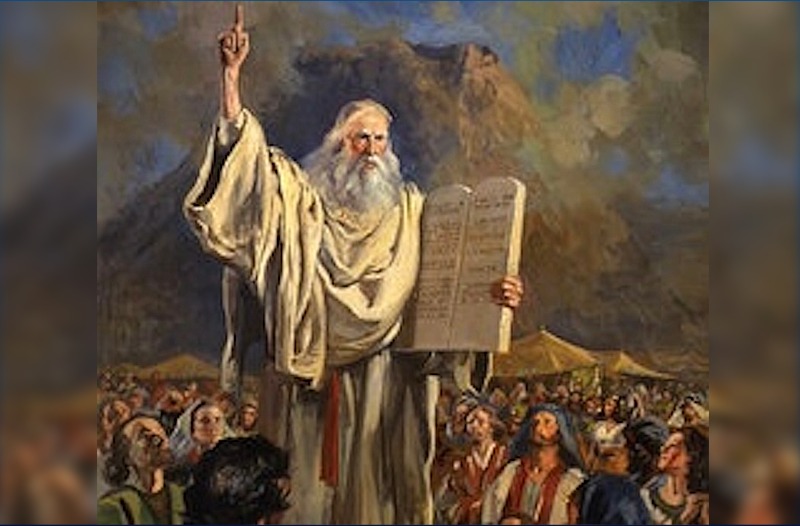
Language has allowed humankind, created in the image and likeness of God, to draw closer to the gods in thought and creativity. Language is a tool for human thought, knowledge, and identity. Language is the guardian of traditions, values, and culture, and an instrument of progress. Language is an attribute of power. To ban a word is to ban a thought. Control over language is control over social relations, consciousness, and behavior.



There are many theories claiming that wars, conflicts, and even family quarrels arise from language barriers and misunderstandings. Words are ambiguous; there are different interpretations, contexts, and subtexts. Members of the Supreme Court often disagree on the interpretation of the Constitution. Parties to international treaties read them differently.
The conditions of existence and ideology create their own catechism, their own language and concepts; they dictate meaning and shape education, culture, the language of the media, and everyday speech. Words can be reinterpreted: truth, rights, law, freedom, justice, independence, progress—here, a dictionary alone will not help us reach a common understanding.
In the Torah, every act of creation begins with the words, “And God said.” In Judaism, every letter has a sacred meaning and value. Christianity affirmed the sacred role of the word: “In the beginning was the Word, and the Word was with God, and the Word was God.” Truth is found in Scripture. Connection with God is through the word—prayer.
Language is a living organism, constantly evolving. Shakespeare’s works contain 61,000 words; today, the Oxford Dictionary lists 600,000; and the entire corpus of the English language—including technical terms, slang, and neologisms—totals up to 3 million. Pushkin’s works contain about 22,000 words; the Great Academic Dictionary lists 500,000; the entire corpus totals about one million. The revival of Hebrew is unique; the Tanakh—Biblical Hebrew—contains 8,000 words. At the time of Israel’s founding, there were 35,000; today, the entire corpus numbers up to 150,000.
Literature gives meaning to, enriches, and enhances the social significance of language. The social role of language and the culture of speech—Molière’s *The Bourgeois Gentleman*. The creation of a personality through words, the transformation of the simple country girl Eliza Doolittle into a duchess—Bernard Shaw’s *Pygmalion*. Language has been impoverished; people have lost their reason—Ray Bradbury’s *Fahrenheit 451*. “Newspeak” as an instrument of totalitarianism—George Orwell’s *1984*. Whoever controls language controls the truth; whoever bans language controls power—Umberto Eco’s *The Name of the Rose*. Speech as an expression of mental illness and moral decay—Dostoevsky’s *Notes from the Underground*. Language as an expression of class-based thinking and behavior—Bulgakov’s *A Dog’s Heart*. Petty language = narrow-mindedness—*Ellochka the Cannibal* and *The Twelve Chairs* by Ilf and Petrov. The revival of Hebrew after millennia—*A Tale of Love and Darkness* by Amos Oz.
Language is inextricably linked to the social order. In a despotic regime, an objectionable word is a crime. Catherine the Great read Radishchev’s *Journey from St. Petersburg to Moscow* and declared: “This rebel is worse than Pugachev.” The sentence: death penalty, stripping of official rank and nobility, and burning of his books. The sentence was commuted to 10 years of exile. He took his own life. For Pushkin, the censors included the chief of the gendarmerie and the tsar. “The Petrashevsky Affair”—they read Belinsky’s letter to Gogol together. Dostoevsky and 20 others were arrested. The sentence: execution by firing squad. It was a cruel show; the execution was commuted to hard labor. He remained under police surveillance for the rest of his life. The Gulag, filled with writers, did not spring up out of nowhere.
But even under such conditions, sprouts of life broke through the asphalt. Under pressure and control, great literature was created. Brodsky is credited with the aphorism: “Empires create literature; democracies create waste paper.”
The Russian language was enriched by borrowings from Western languages. Pushkin, Lermontov, and Turgenev made extensive use of French vocabulary. A quarter of the first volume of Tolstoy’s *War and Peace* was written in French. Dostoevsky hated the Westernizers, but *The Demons* is full of borrowings. The aristocracy spoke French. Knowledge of foreign languages helped the Russian elite when counts and princes had to work as chauffeurs and waiters in Paris and Berlin.
abokov filled his novels with Anglicisms; Chekhov coined neologisms; Gorky made extensive use of slang; Platonov created a language of rootlessness, inadequacy, and inarticulateness; Kruchenykh, Pilnyak, and Kharms invented nonsense, dismantling logic and coherence. When a writer lacks words, he invents them. The most notable Futurists and Acmeists in this field are: David Burliuk, Velimir Khlebnikov, Vladimir Mayakovsky, Igor Severyanin, Nikolai Gumilev, and Anna Akhmatova.
The proletarian dictatorship did not tolerate such liberties for long. Censorship, Glavlit, and the party press ran rampant. Necessary measures followed: dictionaries were revised, and Ozhegov’s dictionary became the standard, an indisputable canon. Thousands of writers passed through the Gulag; many perished. People were imprisoned for manuscripts, samizdat, letters, conversations, and reading forbidden literature.
When the Soviet Union collapsed, so did the Russian language. During the era of freedom under Gorbachev and Yeltsin, censorship and party oversight were abolished, but instead of great works of art, an avalanche of vulgarity, squalor, and psychopathology emerged.
Тoday, the language of the media, literature, and communication is a nightmare—and this is a global trend. Facebook, Instagram, and TikTok have created their own linguistic culture, triumphing over grammarians and stylists. Slang, banter, the language of thugs, thieves, and hoodlums. Mutilated English has taken over Russian everyday speech. Cringe, vibe, public, toxic, crash, bait, shame, bully, troll, hate, block, abuse, office, gadget, smartphone, screenshot, market, cashback, deadline, grace period, selfie, insight…
Federal Law No. 52-F3 has been passed, the essence of which is to ban the use of foreign words if Russian equivalents exist. It applies to education, official correspondence, and state media. But the reactionary Duma cannot stop the avalanche of degradation and decay.
In America, the battles over linguistic freedom died down in the 1920s and 1930s; the struggle was mainly against pornography and profanity. The guardians of language and morality lost. The English language is not as rich in profanity as Russian. The Dictionary of Russian Profanity spans 12 volumes; the entire first volume is devoted to words beginning with the russian letter X, containing over 500 pages of phraseology and idioms. No other language on the planet can boast such an achievement. The authorities have tried and continue to try to combat profanity, but their efforts are doomed to failure.
In America, freedom of speech is broader than in other countries of the free world. But even here there are taboo topics, and self-censorship is a necessary condition for keeping one’s job and the ability to speak out publicly. With regard to many historical documents, monuments, and literary works, political correctness and the cancel culture are clearly evident and officially supported.
It is possible to find a way to publish independently at one’s own expense, but the typical fate of such a book is a print run of 200–300 copies, sold on Amazon but rarely purchased. Few can make a living from royalties. A free writer is an oxymoron in a dictatorship and an anachronism in a free society. And it is very likely that artificial intelligence will render the writer obsolete altogether.
Artificial intelligence—a language model—has paved the way for a global revolution in consciousness and the way of life. In a very short time, it has monopolized information, knowledge, and intelligence; it is redrawing and reshaping boundaries, norms, and concepts; it is taking over the realm of decision-making; and it is defining reality. Humans cannot compete with AI. And this is only the beginning of a new, unforeseen, and unpredictable way of life. AI communicates with the entire world and with each individual in their own language, tailored to their level of understanding and interests. No one will be left out.

War on All Fronts
The boundaries of free speech are not defined solely by the state and its institutions. It is not merely a matter of the relationship between subjects and objects—the authorities and their subjects. Among the subjects themselves, too, there are strict norms and rules, as well as rewards and punishments for violations and dissent. In the Writers’ Union and the journalistic community, denunciations, scathing criticism, and behind-the-scenes intrigues flourished. Mandelstam, Pasternak, Solzhenitsyn, Babel, Zoshchenko, Akhmatova, Zabolotsky, Shalamov and many others were victims of their own colleagues.
In exile, it is not the authorities or colleagues, but knowledge of the language that becomes the key challenge. For people of the word, adapting to new creative conditions is the most difficult psychological and practical task. In Russian history, this problem has existed since the time of Herzen and Ogarev. One must recreate and redefine oneself in a foreign language. The “honeymoon period”—freedom, euphoria, and novelty—is replaced by culture shock. Status is lost; without status, a different identity emerges.
One’s own diaspora is by no means always a source of protection. Internal conflicts dominate over cooperation and mutual aid. Maria Sinyavskaya, herself a woman of a difficult temperament, said that if there were an opportunity to build a new Gulag, we would build it.
For ordinary people, anonymity and impunity allow them to freely vent their depression and aggression on the internet. There’s no risk of a lawsuit, a duel, or a slap in the face. Getting involved in an argument or trying to prove a point will only intensify the aggression. Pushkin advised: “Accept praise and slander with equanimity, and do not argue with a fool.” But even he could not fully follow his own advice; he responded to a vile lampoon. The genius of thought and word died at the age of 37, while Dantes became a senator and mayor in France, passing away at 83, surrounded by his children and grandchildren.
Freedom of speech is a great achievement, a boon for social and intellectual development. But it also provides ample space for the expression of the worst in society and in people: hatred, inferiority, and envy. Where a decent person will exercise restraint, a boor knows no bounds. The volume of offensive content on the internet amounts to millions of posts daily, and there are no mechanisms for holding anyone accountable. Often these are direct threats or blatant slander. Less than 10% of such content is removed.
The author of an offensive comment isn’t always a villain by design. More often, it’s out of thoughtlessness—a case of “both a joke and a sin.” He’s a fighter for an idea and the truth—or so he believes. Efim, no last name: “..determines the meaning and intentions of all parades.” Intentions—what are they? What language is this? “Would you please stop, Comrade Goldin, SPAMMING here with idiotic nonsense invented in Russia.” (Full text of the comment on my recent article. The author’s spelling and style are difficult to render adequately in English translation.)
Yefim is concerned about the Russian language being cluttered with foreign words. Usually, such concern stems from a passionate love for the country and the people who speak that language. The subject of his concern is not English, not Hebrew, not Ukrainian, but the Russian language. As Turgenev wrote: “O great, mighty, truthful, and free Russian language… It is impossible to believe that such a language was not given to a great people!”
But Efim has a different attitude; he calls Russia “Rashka,” evidence of sentiments far removed from those of a Russian patriot. To dislike and despise one’s country while caring about the culture of its language is a strange aberration of consciousness. Why get so upset and worked up?
Yefim suggests I “stop littering the language with idiotic terms invented in Rashka.” During the struggle against cosmopolitanism and bourgeois influences, Yefim would have been very much in his element. In his notes “On the Purification of the Russian Language,” Lenin wrote: “We are spoiling the Russian language. We use foreign words unnecessarily. Isn’t it time to declare war?” Stalin, in a conversation with Gorky: “Many of us are too fond of foreign things. That’s bad. We must write in Russian, simply, in a way that’s understandable to millions.” At the Writers’ Congress, Stalin raised the tone: “This isn’t culture; it’s servility toward foreign countries.”Many writers and literary figures suffered for their obsequiousness; the country’s leading linguist, Academician Marr, was lambasted by Stalin in *Marxism and Questions of Linguistics*; and mocking the “French-Nizhny Novgorod” dialect—used by know-it-alls and snobs—became a popular topic for satirical pieces and parodies.
I have never worked in the media; but my first degree was from the Journalism Department at Moscow State University, where I trained as a literary editor; the program included a full curriculum from the Department of Philology. I wrote term papers titled “Neologisms in Chekhov’s Letters” and “Foreign Lexical Items in 19th-Century Russian Classical Literature.”
And who would argue that the culture of a society and an individual is defined by the culture of language? Much can be said about the tragic past of the country, its people, and its language, but on radio and television, Levitan, Kirillov, Vysotskaya, Balashov, and Shatilova spoke in impeccable Russian, and in the national press—aside from party oversight and censorship—every publication passed through a dozen editors and proofreaders; a typo or a misplaced comma was grounds for serious consequences. If Efim treats language with such reverence, how could he have written a couple of lines that contain more errors and absurdities than actual words?!
I think that Efim, like me, is Jewish. We left the Soviet Union in the hope that we would not encounter anti-Semitism in our new country. Jews have very few friends, very many enemies, and they are divided. Today, in synagogues, the message is “Love your neighbor,” and Jewish organizations are calling for unity: we must come together.
I’ll try to heed these calls and speak with Yefim without prejudice. People get carried away sometimes—it happens. To start with, as a professor of philosophy and psychology with considerable experience, I advise Yefim to revise his letter: “Dear Professor! Could you please explain why you use the word ‘intention’—which not everyone understands—instead of its Russian equivalents: ‘aspiration,’ ‘intention,’ or ‘desire’? I would appreciate your response.”
I’m happy to respond. The word “intention” has been in common use since ancient times and meant an act of will. It passed from Latin into all European languages. This concept was actively used in Russia during the time of Peter the Great, when the tsar was trying to turn the country toward Western civilization. At that time, the Russian language was enriched with a huge number of foreign words. This greatly contributed to the country’s development and the progress of science and education. “Intention” appears in the works of Derzhavin, Fonvizin, Kantemir, and Lomonosov. Today, “intention” is found in all Russian explanatory dictionaries. As for your “Rashka,” however, it isn’t listed in a single dictionary. In Serbia, there is a city and a river called Raška; in the Middle Ages, that was the name for all of Serbia.
There is no need to “export” “intent” from “Rashka” to the West, as you write; the word has been in use here for many centuries. In modern philosophy, “intent” is a key term in Husserl’s phenomenology, Freud’s psychoanalysis, and Frankl’s logotherapy. It cannot be replaced in translation. This is a narrower and more precise definition than approximate synonyms in Russian.
Foreign vocabulary can be used ironically, even sarcastically. For example: “What is your intention, Efim? To make me stop writing? To write the way you do?”
I write essays related to my professional field—philosophy, sociology, and psychology—and here it’s impossible to do without specialized vocabulary. An interested reader can look up the terms in a dictionary or online, but if it’s not their cup of tea or not of interest to them, it’s better to set it aside. When you want to say something, you need to keep in mind that you’re not an official in the party’s ideological department, nor a Soviet editor or censor, and you should avoid arrogance and rudeness.
I thank Efim for reminding me of my former life under control, restrictions and surveillance, and for the opportunity to discuss an interesting and relevant topic—not just issues of linguistics.
Комментариев нет:
Отправить комментарий