By VLADIMIR SOLOVYOV-AMERICAN | THE FATEFUL TURNING-POINT OF 2026: RUSSIA AS AN ACHILLES’ HEEL
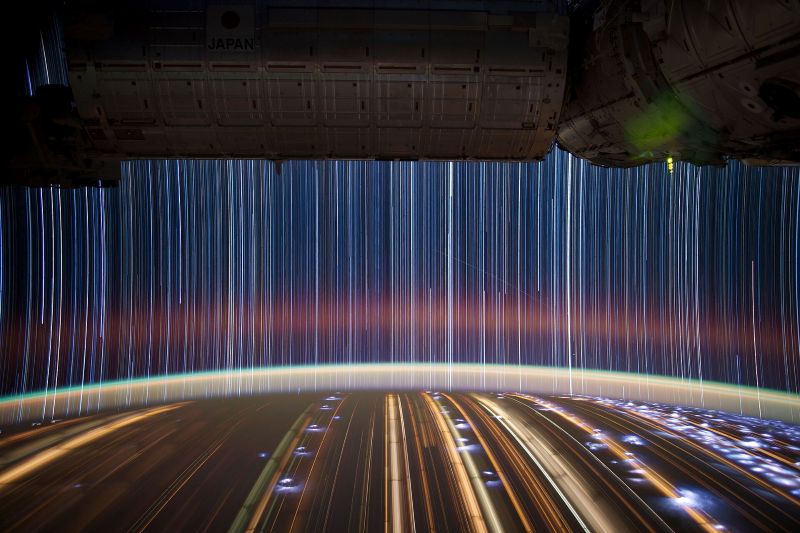
Earth as seen from the International Space Station. Photo: NASA/Wikimedia Commons.
To be honest, I did not make up my mind to write this article right away. It is not so much a matter of something sacred or deeply personal as of things left unsaid, concealed, kept secret. And certainly not because I fear that my political adversaries might cross the bounds of civility. I couldn’t care less. After all, I am Mr. Scandal, as the American press once dubbed me. No, what worries me is that my definitions, insights, and predictions might somehow do harm to America, Europe, Israel, and Ukraine — countries whose cause I have always championed and whose fortunes I care deeply about.
I say care in a double sense. Not merely as a fan, a kibitzer, a spectator, or a voyeur, but in the original, visceral sense of the word: I suffer when we suffer setbacks and calamities, even though I am convinced that these are historically temporary, as in the war with Iran. And I take no less painful pleasure in our victories, both in the Middle Eastern and the European wars — European, mind you, not Russian-Ukrainian. By now, both have long since become part of World War III, given that some fifty countries from every continent are involved in them, directly or by proxy.
Let me invoke Boris Pasternak: the sublime sickness. And, of course, I am also afraid that my conjectures and speculations might stray into the realm of state secrets. Hence my self-imposed restraint.
For the sake of convenience, and to avoid unnecessary arguments, let us put politicians’ names aside and speak instead of the countries they happen to lead — temporarily, at any rate: until the next elections in democracies, or until the death of their rulers, whether natural or violent, it makes no difference, in totalitarian states. This is not to diminish in the slightest the role of individuals in history, particularly such conspicuous personalities as those currently leading America, Russia, and Ukraine, regardless of what one may think of them. Even if, to borrow Leon Trotsky’s devastatingly accurate description of Stalin — a phrase equally applicable to Stalin’s present-day disciple and successor — we are dealing with the most outstanding mediocrity.
An essential footnote is in order here. A change of leadership — even in democracies, let alone dictatorships — can radically alter a country’s course. Stalin’s death is a case in point. Although, strictly speaking, he never quite died: he merely feigned death, lay low, went into hiding, and fell into a kind of suspended animation, until the present master of the Kremlin brought him back to life — and with him, the traditional course of Russian history.
But a change of leadership can also have little, or even no, impact whatsoever. The most recent example is the assassination of Iran’s Supreme Leader Ayatollah. One of the miscalculations made by the United States and Israel in their war against the Persians.
Let me turn to Kafka. In his parable-like short story In the Penal Colony, he wrote something of extraordinary brilliance:
Have you heard of our former Commandant? No? Well, I am not exaggerating when I say that the organization of this colony is so firmly established that his successor, even if he had a thousand new plans in his head, would be quite unable to alter the old order, at least for many years.
Returning to current events: we are approaching the end of 2026, a fateful year of historic turning points. It is still too early to pass judgment on it — anything could yet happen in either the Middle Eastern or European theater of World War III. Nevertheless, the underlying trends are unlikely to change fundamentally.
I will begin with Europe, although the United States is involved there up to its neck.
And that is precisely the point. To turn the meaning of this colloquial expression on its head: whether America wants to be involved or not, it is involved in virtually every major global affair, and the course of world history depends on it more than on any other country. That was true in the last century, when America, albeit belatedly, entered both world wars and ultimately determined their outcome.
What is vast becomes visible from a distance. Yet even now, we can clearly see the strategic role played by the United States in both the Middle East and Europe. Naturally, not without inevitable missteps — but the only one who never makes mistakes is the one who does nothing.
And America is always in action: sometimes openly, as in the case of Iran, sometimes behind the scenes, as in the case of Ukraine. Ukraine may complain as much as it likes — and often with good reason — about delays in American weapons deliveries or interruptions in intelligence sharing. But without American support, Ukraine would have found it far more difficult to withstand the Russian onslaught, as it has done from the very beginning of this already nearly five-year-long idiotic war.
This is America’s dual role. Diplomatically, it can go to extraordinary lengths to persuade the Russian leader to end the war — witness the Kushner-Witkoff mission — while simultaneously pursuing that very objective by military means, through its assistance to Ukraine.
Of course, one should trust in God but also do one’s own part. Or, as my American friend translated this Russian proverb: God protects those who protect themselves.
And that is precisely what Ukraine is doing, with the help of its homegrown Flamingo and Neptune missiles, as well as other missiles and drones developed by its fantastically inventive, weapons-producing company, Fire Point, headed by the magician Denys Shtilerman.
Ukraine is ahead of the pack. Its weapons are being purchased by everyone, from Middle Eastern nations to European countries.
Meanwhile, Kyiv continues, almost out of habit, to plead with Germany for long-range Taurus missiles, which are particularly effective at destroying bridges. The Germans have continued to refuse. But now they have acquired a rather compelling counterargument: the Ukrainians don’t need our missiles when they already have their own — and better ones at that.
And now there is proof: Ukrainian weapons have struck the Kerch Bridge, a structure that was historically doomed and is now, in practical terms, doomed as well.
Incidentally, take note: Ukraine struck the section of the bridge adjoining Crimea. In other words, not Russian territory, but its own territory and its own territorial waters. Every rule of the (military) game has been observed.
“We are only getting started,” Ukraine’s defense minister declared.
Period?
No. An ellipsis.
Because Ukraine is also striking deep inside Russia with its own weapons, from Moscow and St. Petersburg all the way to Siberia, far beyond the Urals.
And this is where Russia’s vast territorial expanse — once a source of immense national pride, celebrated in the famous phrase From Moscow to the farthest reaches — has turned into a strategic liability.
For such an enormous country is not merely difficult to defend. It is impossible to defend in its entirety. And the Ukrainians are taking full advantage of this vulnerability, destroying military targets across Russian territory, from air bases and missile launch sites to oil refineries. They have already knocked out more than half of Russia’s oil-refining capacity, turning the country from an oil exporter into an oil importer.
Russia’s military vulnerability, stemming from its pathologically enormous territory, has transformed the entire country into one giant Achilles’ heel.
And that is without even mentioning the internal contradictions of my geographical homeland — economic, demographic, and otherwise — all of which this war has made considerably worse.
There is even talk of the titular Russian nation facing extinction. Well, I would not go quite that far. And so I would like to end on a lighter note.
To close, here is a joke on the subject:
We are on the verge of extinction.
Great-grandmother had 12 children.
Grandmother had 6 children.
Mother had 3 children.
I have one daughter.
My daughter has a cat.
The cat has been neutered.

Владимир Исаакович Соловьев – известный русско-американский писатель, мемуарист, критик, политолог.
Комментариев нет:
Отправить комментарий