Leonid Goldin | “Baby Killer” in Courts and Police Stations
“Baby Killer” is Rabbi Shmuli Boteah. Anti-Semites attack him at public events or when they happen to run into him on the street. He constantly receives letters threatening him with sadistic violence, but there is no one to turn to for help. His only defense is his phone, which he uses to record videos of the rampant anti-Semism in America and many countries around the world.
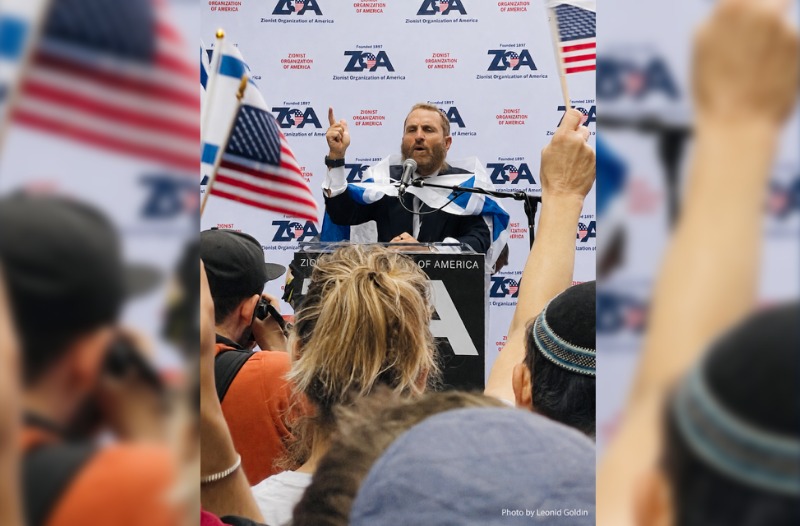
These videos are a sad testament to our times; he posts them on social media, increasing both his popularity and the number of his haters. He is writing a new chapter in Jewish history, and he sees this as his mission. “If not me, then who? And if not now, then when?” This is the foundation of Jewish ethics. The phrase was used by Rabbi Heschel during the civil rights marches with Martin Luther King Jr., by Ronald Reagan in his speeches, by the Israeli army, and by activists.
Using the phone for its intended purpose—calling the police to report an attack—is futile; freedom of speech and protest prevail. People often say that he provokes others with his appearance as an Orthodox Jew, and instead of trying to avoid conflict, he engages in arguments, believing that laws and human rights still exist in a free world. But more and more often, it turns out that these laws and rights do not apply to Jews.
He has been detained by the police on multiple occasions and has been involved in numerous lawsuits and legal proceedings. Recently, at the World Cup, he was surrounded by a crowd chanting “Baby Riller.” “If a Jew can be threatened during the World Cup, in the presence of many thousands of police officers, then Jews are not safe anywhere,” says Shmuli.
The press often calls Shmuli the most famous and influential rabbi in America; he is a media superstar—there is probably not a single major TV network, radio station, newspaper, or magazine that has not covered him. His interviews, participation in debates, and publications are always major events; he is the author of more than thirty books and places full-page ads in mainstream media against anti-Semitism and in support of Israel—this is his way of fighting for the biblical ideas and principles he brings to the secular world.nt: 0:07




Shmuli gained worldwide fame in his youth when Rebbe Schneerson sent him to the University of Oxford, where he founded a Jewish organization that featured prominent politicians and statesmen, stars from the arts and sports, and where open discussions took place with an audience that brought together young people from different countries, backgrounds, and faiths.
In America, he founded the “Global Network of Jewish Values,” whose events featured representatives of racial minorities, the LGBTQ community, and celebrities from the worlds of the arts and professional sports. The audience could include believers and atheists, Republicans and Democrats, supporters and detractors of Trump and Netanyahu, and wounded Israeli and Ukrainian soldiers.
Shmuli gained the widest recognition for his debates with anti-Semites from both the left and the right. Shmuli is a brilliant orator and an unyielding debater, but one must admit that his knowledge and logic, skill, and experience are of little help when confronting fanatics and those who hate Jews. Who in their right mind would enter into a debate with Candace Owens, given her reputation? But Shmuli was eager to fight, and ended up facing yet another lawsuit demanding financial compensation. I don’t know how he got out of that one.
But where anyone else would have decided that arguing and trying to prove a point is pointless, Shmuli doesn’t back down; he’s always ready for a new battle, no matter the cost. Compromising on faith and dignity is out of the question for him. For him, these disputes are all the more appealing the more aggressive and popular the opponent is.
Perhaps no modern Jew has drawn as much hatred from anti-Semites as Shmuli. Millions have seen video footage of him being attacked and insulted in New York, New Jersey, Miami, Toledo, Spain, Vienna, Austria, Sydney, Australia, and during a cruise in Germany. And even in Jerusalem, on a holiday, at the Western Wall, some yeshiva student—a brainless Chabadnik—publicly insulted him in the presence of his wife and children, who serve in the Israeli army.
Shmuli was involved in lengthy and costly lawsuits with the owners of a prestigious hotel in Florida, where a Muslim fanatic attacked him and threatened him with violence, but the hotel owners accused Shmuli of provoking the incident. In New York, he led a memorial prayer in memory of a young woman who was killed in Israel on October 7; the young woman’s father and about ten other people attended, and Shmuli was accused in court of failing to ask permission from the owners of a public park.
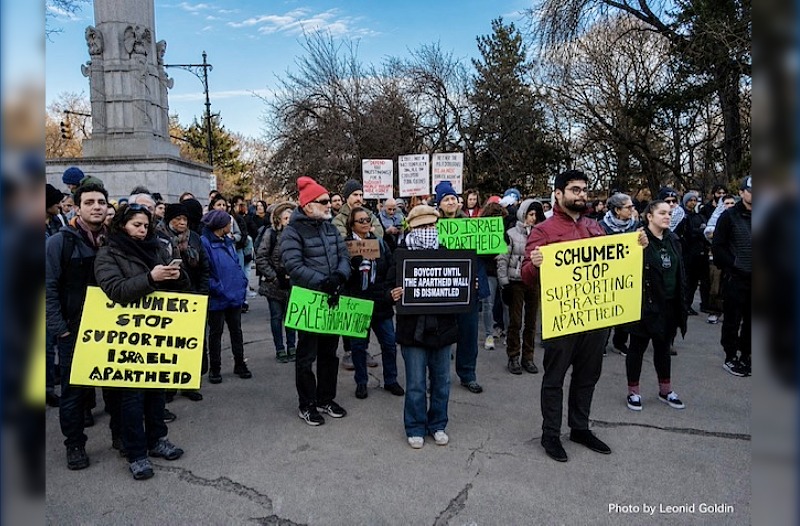
The rabbi has very complicated relationships even with those with whom he shares political views and interests: Chabad, the Zionist Organization of America, the Anti-Defamation League, and other Jewish organizations.
Shmuli is concerned about the low level of education in Chabad yeshivas, his community with which he has long been in conflict. For Shmuli, Rebbe Schneerson is his primary spiritual mentor; he believes that Chabad is carrying out sacred work throughout the world, but he has been unable to find common ground with them.
Shmuli engaged in a serious debate with the Satmar rebbeTeitelbaum about the nature of the Jewish state; many Orthodox Jews believe that all problems stem from the fact that Jews violated the commandment by not waiting for the coming of the Messiah. Shmuli is a staunch Zionist, while the Satmars oppose Jewish participation in Israel’s public life—from elections to military service. (They are allowed to receive government benefits.)
Some Orthodox rabbis say that October 7 was a punishment for sins, apostasy from Judaism, and Israel’s loss of its identity as a Jewish state. Is “Hamas” an instrument of divine providence? Shmuli rejects this idea as blasphemous. This tragic debate is not new—the same explanation was attempted to be applied to the Holocaust.
When the great Kabbalist Pinto gave his blessing to the repentant rapper Kanye West, author of the hit “Heil Hitler,” Shmuli spoke out in condemnation, saying that the sin of hatred is not so easily forgiven.
His friend Rudy Rochman, a Jewish activist and soldier in the Israeli army, engages in dialogue with Israel’s opponents. He invited a group of anti-Semitic bloggers—who had staged a scandalous gathering featuring a Nazi ritual at a nightclub in Miami—to spend Shabbat with him. Shmuli responded with an angry rebuke—they must first repent publicly. It’s strange to hear such a demand from him—he himself is always ready to debate anyone.
In Jewish tradition, disagreements are not to be taken outside the community—much to the delight of anti-Semites—but if Shmuli believes moral principles have been violated, he will not remain silent; no one can tell him what to do.
For Shmuli, there are no taboo topics. His book *Kosher Sex* is a global bestseller, and his show on the subject is watched by millions. Although he extols the virtues of Orthodox Jewish intimacy, most rabbis have condemned him without even reading the book. Shmuli’s attempts to link Jewish sexuality to the envy of anti-Semites left me perplexed. On the contrary, anti-Semites have long attributed to Jews a pathological inclination toward non-Jewish women and perversions.
It is difficult for me to assess Shmuli’s relationship with Rabbis Adin Steinsaltz and Joseph Telushkin, who consider *Kosher Jesus* a “heretical” book. Steinsaltz is an intellectual titan who single-handedly translated the Babylonian Talmud into 46 volumes; he is the author of a classic work on Kabbalah and more than 100 books. For me, he is the greatest authority, and meeting him was one of the most memorable events of my life. Telushkin’s monograph *Jewish Literacy* resolved for me the contradiction between faith and its rational understanding.
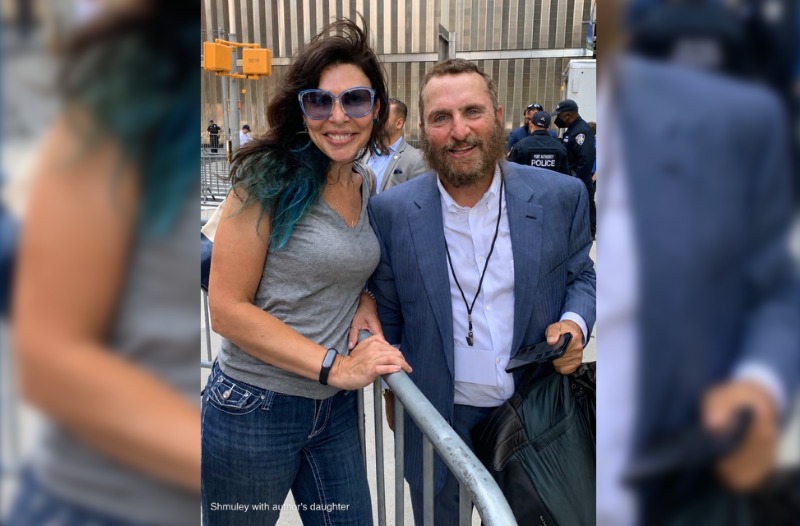
I’m not trying to be impartial; I’m not judging from the outside. Shmuli and his wife Deborah—who heroically shares her husband’s mission—and I have known each other for many years; I’ve participated in his events many times, attended his Shabbats, and consider him a brilliant intellectual with a broad outlook and wealth of experience. I constantly run into him at concert halls and museums; he travels a great deal and has a fantastic work ethic. He has his own distinctive, vivid journalistic style, and his speeches and debates are reminiscent of a biblical prophet.
Shmuli has many critics from all sides. Secular Jews believe he doesn’t ease the crisis but rather exacerbates it, provoking hostility; Orthodox Jews believe he strays from the commandments and is too preoccupied with politics and self-promotion. I’m not here to judge; I respect Shmuli and value his heroism and integrity. There are many Jews who are ready to criticize and lecture everyone about everything without getting off the couch or stepping away from the TV or computer, but who would never take to the streets to demonstrate in support of Israel or donate a single cent to the Jewish cause.
Anti-Semitism is on the rise both in this country and around the world. According to an ADL survey, nearly half of Americans hold anti-Semitic prejudices. According to an AJC survey, 77% of Jews feel less safe than they did a year ago. In New York, 60% of hate crimes are directed at Jews. In Queens, in Forest Hills, a rabbi was punched in the face and thrown to the ground amid shouts of “Dirty Jew.” In California, an Arab professor struck Paul Kessler on the head with a megaphone, killing him. The punishment: one year in prison. What would have happened if the victim had been a Black American? Jews in academia, the mainstream media, and the cultural sphere—unless they are liberals sympathetic to the Palestinians—are afraid to speak up or wear a kippah. It is dangerous for Jews in traditional clothing to go out on the street or enter the subway.
“Free Palestine” demonstrations—it’s clear to everyone that they call for the destruction of Israel—draw thousands of participants, and Jewish activists are unable to stand up to them. Synagogues are besieged fortresses. Security at New York’s Central Synagogue has been tripled, with metal detectors and bag checks; it is open only on Shabbat and holidays. Nearby stands St. Patrick’s Cathedral, and across the street is a Muslim center, where the doors are always wide open and entry is free.
The current situation is nothing new in Jewish history. Lucy Davidovich’s book *Jewish Life and Thought in Eastern Europe* is dedicated to the memory of the six million victims of the Holocaust; it is a collection of testimonies to centuries of anti-Semitism that has never disappeared. Amos Elon’s book *The Pity of it All* is a phenomenal account of the tragic fate of the great Jews—the intellectual elite of Western Europe. The Jews of Europe believed that freedom and equality, rights and security would be brought about by the Enlightenment, reforms, revolutions, the Communist International, and liberal democracy, but these beliefs and expectations invariably turned out to be utopian.
American history, too, is not free from prejudice against Jews. Perhaps the most serious study, *The Abandonment of Jews: America and the Holocaust*, a monograph by David Wyman, details how President Roosevelt, the State Department, the military, the media, the public, and even Jewish organizations failed to seize the opportunity to limit the number of victims of Nazism. But the “burden of shame” has long since vanished, and today, in the public consciousness, the victims of genocide—the Holocaust—are those who regard Hamas terrorists as national heroes and celebrated October 7.
The picture is grim, and it is difficult to accept. One can find solace in a Reform synagogue, where they will speak of the benefits of education, humanitarian efforts, building bridges, and dialogue; they will offer hope through a new program to combat antisemitism and the election of the right president. Among the Orthodox, there is more prayer and more donations; they light candles, and the Messiah will come, and all problems will be solved. Many feel apathetic, helpless, and alienated. But at least there are fewer illusions and utopian hopes.
If one can’t change it, one must at least try to understand it. Much of this is explained by Arthur Cohen’s magnificent study, *The Natural and the Supernatural Jew*. The natural Jew lives in the here and now. The transcendent Jew lives at the end of time, in eternity and meta-history. Exile is not a geographical condition but a state of the soul; alienation and uncertainty are commensurate with the conditions of existence.
Long before Hegel, Spinoza said that the one who understands and acknowledges necessity is free. Today, there is little hope for wise and swift solutions. But there is a conscious necessity—to preserve oneself and one’s values in a world of chaos and uncertainty.
Photos by Leonid Goldin.
Комментариев нет:
Отправить комментарий